

App Critique: LinkedIn Games
Where grindset grinds to a halt

LinkedIn is a journey to the glorified world of work, inflating our career accomplishments well beyond the sad reality of clocking into a 9 to 5. The highlights I see while scrolling through my feed are the hashtag-laden posts, the join-me-on-my-next-adventure job exit, influencer slideshows, and (of course) the heartstring tugging work/life balance story. We get to show off how much we love our jobs and how committed we are to our careers.
LinkedIn is the adult social network where we tastefully display how knowledgeable we are about our corner of the work world. All the thirst traps and politicking is meant for those other sites – there are HR folks on here! Honestly, I have to applaud the way LinkedIn’s brand has rewarded austere posting and somehow maintained its air of professionalism. Most of us take it all so seriously and scold others who fail to treat the community the same way. The site feels like an actual workplace, bravo LinkedIn.
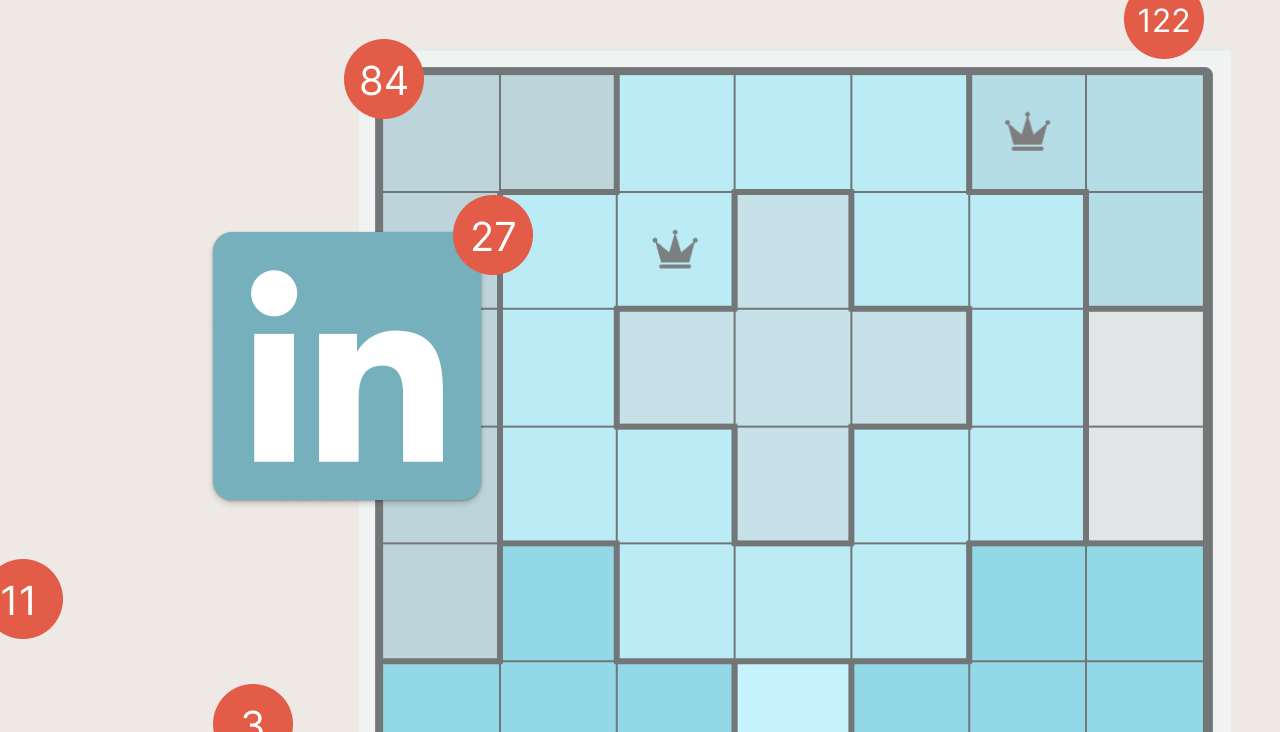
So, what I want to know is: who in product thought it was a good idea to offset all these productivity vibes with games?! I know you’ve seen the Puzzles fed to you on the home screen and in your notifications (more on that in a minute), I just don’t get at all how this is anywhere near on-brand for a company that encourages likes for users flexing their KPIs. I’m almost certain that if your boss caught you playing these puzzle games on the clock you’d get reprimanded right quick.
I would postulate that the genesis of this feature had something to do with taking a break from work to exercise your brain or some other nonsense, but that feels like a bit of a reach. First of all the games look like slapdash puzzles you’d find in a Highlights magazine, probably based on some techbro pseudoscience about your synaptic response time. The engagement bait quality feels overwhelming, as if it’s for you to annoy your friends by goading them to log on and beat your latest score. Mostly it’s reminiscent of putting a pinball machine in the office in an attempt to fix the vapid culture.
As I was writing this critique I came up with half a dozen feature ideas that feel like they have actual, real world application and are more on brand than these lackluster puzzles. You could implement a resume builder where you upload your resume and it helps you with typos, grammar, adding metrics or making your experience more concise. Then pair that with a profile wizard that matches your profile and resume, helps you select the appropriate skills, and gives you keyword friendly introduction options. Then you could add an AI profile avatar enhancer, it’s clear LinkedIn users are already updating their photos with AI, they might as well integrate it into the product.
On the flip side of the AI discussion, so much content is being hijacked and shat onto our feed, maybe a ChatGPT bullshit detector that lets you know if the post has been AI generated and allows users to vote on its utility. All of these ideas I just pulled out of my posterior feel more relevant to my career than this slipshod attempt at capturing the Candy Crush audience. And I even weaved in the AI tech hype cycle into it all!
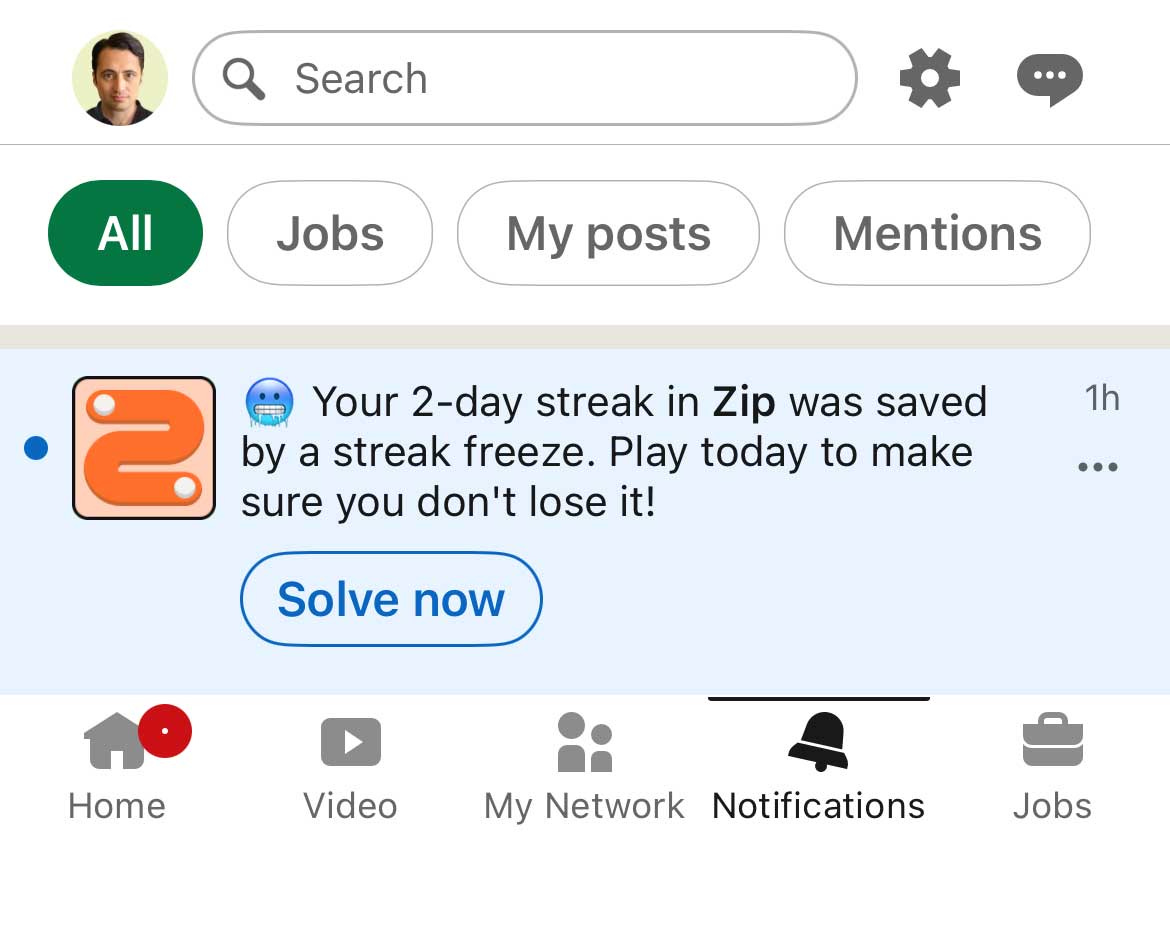
What’s been getting under my skin the most about this drivel is that YOU LITERALLY CANNOT SHUT OFF THE NOTIFICATIONS, no matter how many times you click ‘show me less like this.’ Dark patterns abound in playland, apparently. The ramifications for this specific feature are relatively minor, but what does this mean for opting out in the hands of other publicly traded companies? If a company of LinkedIn's size can get away with ignoring functionality in their web app, what other more nefarious features are companies allowed to force feed us?
LinkedIn can be a social media punching bag, insomuch that work is a necessary evil, so the posts usually are laced with cringe or feel like grindset farming. And as the market turns south, we’re going to need LinkedIn in the coming days to fuel our job search in earnest, not dick around playing games. So, maybe it’s time to shut off this feature before we all find ourselves in a maze of despair we can’t click our way out of.